

SYNCHRO 4D
Take control of your projects: plan, simulate, optimize
SYNCHRO 4D is a 4D planning software that allows you to visualize, simulate and manage your construction projects. It synchronizes models, teams and schedules, facilitating collaboration, decision-making and optimizing time and cost for more efficient and controlled construction projects.
SYNCHRO 4D: Improve your planning and construction operations with 4D!
Plan it virtually. Build it with confidence.
Give your teams the means to advance their construction projects through better visibility and control. SYNCHRO 4D offers advanced 4D planning, visualization and productivity monitoring features, connecting the field and office to enable faster, safer and more reliable projects.
Make informed decisions
Ensure team cohesion and timeliness through 4D models and performance monitoring.
Reduce costs and risks
Take advantage of 4D construction simulations to proactively plan, manage risks and avoid bad surprises.
Improve safety and quality
Validate plans and detect problems as soon as possible to minimize repeats and improve site safety.
Guarantee a smooth transition
Provide accurate numerical construction models (digital construction pairs) that facilitate commissioning.
Office software for advanced 4D construction modelling
Create 4D-based planning and simulations
Define work areas for better planning
Decompose design models into constructable elements
Perform model-based metres and cost/volume structures (QTO/WBS)
Integrate with site and site management
Agregate the models in a federated model
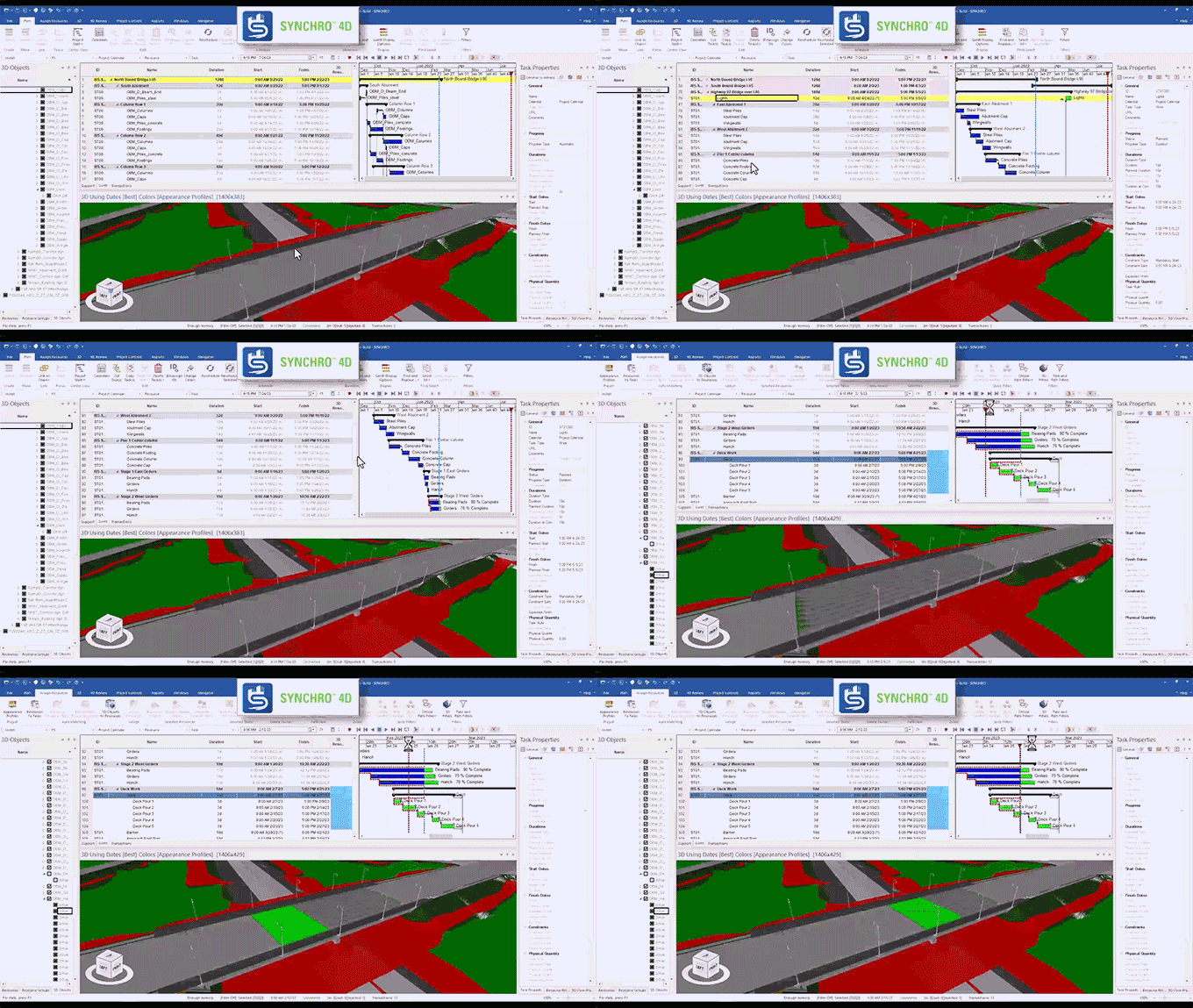

SYNCHRO 4D
Stand out during bidding with 4D simulations that give life to your execution strategy. SYNCHRO 4D offers you a competitive advantage by showing precisely how complex projects will be carried out, making your proposals more convincing, credible and superior to static 2D documentation.
User Word
Taking into account the challenges identified by the 4D model, significant productivity gains were achieved for the project engineers and supervisors, allowing them to focus on planning and managing the problems identified upstream and mitigate their impact.
— Stephen Corney, Head of Digital Engineering, Laing O